
What Does a Car Service Include?
A standard car service usually includes an engine oil and filter change, fluid level checks, brake inspection, tyre inspection, battery testing, and a general safety check. Depending on the type of car service, additional checks like spark plugs, air filters, and diagnostic scans may also be included. That being said, it’s mandatory to regularly service your vehicle to keep it safe, reliable, fuel-efficient, and compliant with manufacturer requirements.
So, are you wondering, “What does a car service include?” This blog explains everything in detail, including what mechanics typically inspect during routine maintenance and how different service types help maintain your vehicle’s performance and long-term reliability. By the end of the article, you’ll have a complete idea of what services to take and when.
What Is a Car Service?
A car service is a scheduled maintenance that helps check important vehicle components before they develop faults. Instead of waiting for something to fail, technicians inspect key systems and replace essential fluids and parts to keep everything operating correctly. This preventative approach helps maintain performance, safety, and long-term reliability.
Understanding car service helps you see why servicing is not just routine maintenance. It protects engine components, supports braking performance, and keeps steering and suspension working as expected. Most importantly, regular servicing helps detect early wear before it becomes expensive damage.
During servicing, car mechanics inspect areas such as:
- Engine oil and filters
- Brake components
- Tyres and suspension
- Battery condition
- Steering system
- Essential fluids
What Does a Standard Car Service Include?
When you drop your vehicle at a workshop for a service, technicians follow a structured inspection process based on manufacturer guidelines and service intervals. The exact components to be checked vary depending on vehicle age, kilometres travelled, and the selected service type. Knowing what happens during a car service helps you understand the value behind routine maintenance.
Most workshops use a multi-point inspection system to ensure essential safety and performance components are working correctly. These inspections help identify worn parts early and reduce the risk of unexpected breakdowns later.
Typical servicing tasks include:
-
Engine Oil and Filter Replacement
Replacing engine oil is one of the most important parts of any service. Fresh oil lubricates internal engine components and helps control operating temperature.
Technicians normally:
- Drain old engine oil.
- Replace the oil filter.
- Refill with manufacturer-recommended oil
This improves engine efficiency and reduces long-term wear.
-
Fluid Level Inspection and Top-ups
Your vehicle relies on several fluids to operate safely and smoothly. During servicing, mechanics check:
- Brake fluid
- Coolant
- Transmission fluid
- Power steering fluid
- Windscreen washer fluid
Correct fluid levels support braking safety and engine protection
-
Brake System Inspection
Brakes are checked during every service because they directly affect road safety.
Professionals inspect:- Brake pad thickness
- Disc condition
- Brake fluid level
- Overall braking response
Early detection prevents further damage to braking components.
-
Tyre Condition Inspection
Tyres affect handling, braking distance, and fuel consumption. That’s why the following inspections are done:
- Tyre pressure
- Tread depth
- Uneven wear
- Sidewall damage
Maintaining tyre condition improves stability and comfort.
-
Battery and Electrical Checks
Battery testing helps avoid unexpected starting issues. During inspection, technicians check:
- Battery charge level
- Terminal condition
- Charging performance
Electrical systems are also checked to confirm safe operation.
-
Engine Components Inspection
Inspecting engine components helps identify early signs of wear that may affect performance or reliability. This step supports preventative maintenance and reduces the likelihood of major repairs later.
Technicians commonly examine:
- Belts and hoses
- Air filter condition
- Cooling system components
- Visible engine leaks or loose connections
These checks help ensure your engine continues running smoothly between service intervals.
-
Lights and Safety Checks
Lighting systems are inspected to confirm roadworthiness.
Mechanics cover:
- Headlights
- Brake lights
- Indicators
- Interior warning lights
- Wipers
Types of Car Service in Australia
Vehicles require unique servicing depending on manufacturer schedules and kilometres travelled. That’s why understanding the different types of car service involved helps you plan maintenance correctly and avoid missing important inspections.
Each service level focuses on a different depth of inspection. Some solutions might help maintain daily performance, while others provide a more detailed mechanical health check.
The most common service types are minor, major, and logbook services. Let’s understand them in detail next:
-
Minor Service
A minor car service focuses on key maintenance items that support regular driving performance. It is the most common type of routine servicing and usually includes:
- Engine oil replacement
- Oil filter replacement
- Fluid level checks
- Brake inspection
- Tyre condition inspection
- Battery check
- Lighting inspection
This service helps maintain engine performance between major inspections.
-
Major Service
A major car service includes deeper inspections and replacement of key wear components. It is recommended when your vehicle has crossed higher kilometre intervals.
Major servicing normally includes everything in a minor service plus:
- Spark plug replacement
- Air filter replacement
- Cabin filter replacement
- Brake fluid replacement
- Suspension inspection
- Belt and hose inspection
- Diagnostic scan
Major servicing protects long-term vehicle reliability.
-
Logbook Service
The third one is a logbook service that follows the maintenance schedule set by your vehicle manufacturer. This service ensures your car continues operating according to factory standards and:
- Follows manufacturer procedures
- Uses approved parts and fluids
- Records servicing history correctly
- Supports warranty compliance
This type of servicing is especially important for newer vehicles.
Minor Car Service vs Major Service
Comparing minor vs major car service helps you know which solution your vehicle needs at different intervals. This table can give a clear idea:
| Service Feature | Minor Service | Major Service |
|---|---|---|
| Engine oil change | Included | Included |
| Oil filter replacement | Included | Included |
| Fluid checks | Included | Included |
| Brake inspection | Included | Included |
| Tyre inspection | Included | Included |
| Spark plug replacement | Not included | Included |
| Air filter replacement | Not included | Included |
| Cabin filter replacement | Not included | Included |
| Brake fluid replacement | Not included | Often included |
| Suspension inspection | Basic inspection | Detailed inspection |
| Diagnostic scan | Sometimes included | Usually included |
Minor servicing maintains everyday performance, whereas major servicing provides deeper mechanical protection. It’s always best to ask the mechanic about the services included in case they differ.
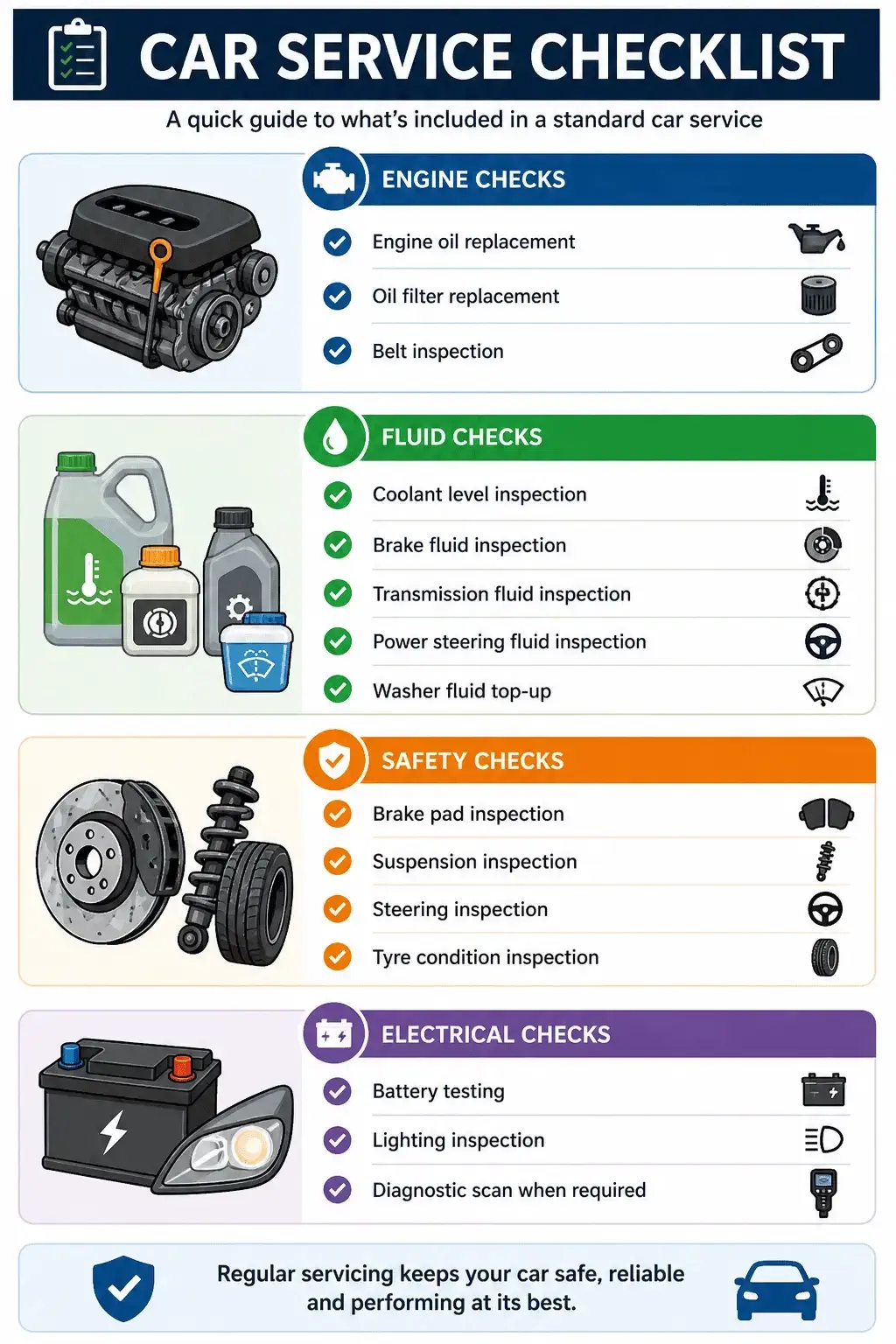
Car Service Checklist: What Do Mechanics Usually Inspect?
Most workshops follow a structured car service checklist to ensure nothing important is missed. This list helps technicians identify early warning signs before they become serious mechanical problems. Here’s what is covered:
How Much Does a Car Service Cost in Australia?
The cost of servicing your vehicle depends on several factors, including the service level, vehicle type, and manufacturer requirements. If you learn about the typical pricing, you can plan maintenance confidently and avoid surprises when booking your next inspection. What’s more, having an idea about the average service cost also helps you compare workshops and choose the right service at the right time.
Average Car Service Cost in Australia
Typical servicing costs for standard passenger vehicles generally fall within these ranges:
- Minor Service: Between $150 and $300
- Logbook Service: Between $250 and $600
- Major Service: Often between $350 and $800+, depending on vehicle requirements
These ranges can change depending on your vehicle make, kilometres travelled, and whether additional parts are required during inspection.
What Affects the Cost of a Car Service?
Several factors influence how much your service will cost, including:
- Vehicle make and model, especially if it’s European or performance vehicles
- Selected service type within the different types of car servicet
- Manufacturer service schedule requirements
- Replacement parts needed during inspection
- Labour time required for diagnostics and safety checks
A transparent workshop will always discuss additional car repairs before proceeding, so you remain informed throughout the service process. At Victorian Auto Services, our mechanics first inspect your vehicle to give proper guidance and then start the job if you agree.
How Often Should You Service Your Car?
Servicing your vehicle at the right interval helps maintain safety, reliability, and long-term performance. Many drivers wait until a warning light appears, but routine maintenance works best when completed before issues develop. Understanding service timing also helps you plan ahead and avoid unexpected repair costs.
Most manufacturers recommend servicing every 10,000 to 15,000 km or every 6 to 12 months, whichever comes first. The exact interval depends on your driving conditions, vehicle model, and the type of car service required under your maintenance schedule. Following these intervals ensures your vehicle continues operating efficiently and helps maintain warranty compliance.
Read our detailed guide on how often you should service your car to understand the right service intervals based on your vehicle type, driving conditions, and manufacturer recommendations.
Book a Professional Car Service with Victorian Auto Services!
If your vehicle is due for maintenance, professional servicing helps keep it running safely and reliably on the road. An experienced team correctly inspects your vehicle and service according to manufacturer standards.
At Victorian Auto Services in West Melbourne and Melbourne CBD, your vehicle is serviced by skilled technicians with over 20 years of experience. You can also get specialist support for European vehicles. As a VicRoads Licensed Vehicle Tester and VACC Accredited Repairer, we provide trusted servicing that follows correct manufacturer procedures and safety standards.
Whether you need a routine inspection, advice on your ideal car maintenance schedule, or a scheduled logbook service in West Melbourne, we’ve got you covered. Call us on 03 9329 6299 or email us at enquiry@victorianautoservices.com.au for bookings or service advice.
Frequently Asked Questions
Your vehicle may display a dashboard reminder, reach its kilometre interval, or show signs such as unusual noises, reduced performance, or warning lights. Booking early helps prevent larger mechanical issues. Contact Victorian Auto Services today.

 AIRCON LICENCE NUMBER : AU26165 | Web Design Melbourne

